The Canadian Environment Minister Rona Amborse was 'grilled' yesterday during Question Period about the new climate and air quality policy, according to the CBC. Ambrose failed again to give any specific about the new policy other than "It’s time for a brand-new approach to the environment. This new approach is going to address the real priorities of Canadians in a tangible and accountable way."
The quote and the constant complaints about the former Liberal government's failure to implement an effective Kyoto implementation plan suggests the new policy will have little to do with climate change and international emissions targets, and more to do with what one might call the modus operandi of the current Canadian government: set very achievable goals, and then boast that promises are being met. Maybe that is good politics. It is not good for the climate.
That's why I continue to say watch out for an exotic-sounding but empty "intensity"-based target.
For a foreign take on this issue, try the Washington Post. As the article points out, the new policy may still prove politically divisive, especially if it focuses on emissions from the Ontario-based auto sector and not the Alberta-based oil sector. If so, the Conservative government would fall into similar trap as the Liberals' Kyoto policy, which they gave the auto sector and some industries a pass on emissions reduction. A sensible emissions policy is one that targets industries equally, like the new California policy.
Thursday, October 05, 2006
Blustering about climate policy in Canada


International climate change talks in Mexico
At a gathering in Mexico, representatives of the G20, that is representatives of the self-appointed 'G8' nations and 12 others countries we were deemed worthy of inviting to the party(oh, diplomacy), are chatting about climate change and energy.
According to the BBC, the results are mixed. The countries agree serious action is needed. Rick Samans, head of the World Economic Forum said politicians need to act fast because "We are behind the curve, there is no doubt that we should have acted 10 or 15 years ago" (i think i just pulled a muscle in my rib cage trying to withhold a sarcastic 'oh really?' comment). On the other hand, no promises are being made, and the US, India and Russia appear to be putting little into the conversation.
Tuesday, October 03, 2006
Warming vs. heating
In his recent book "The Revenge of Gaia", the scientist James Lovelock of Gaia hypothesis fame uses the term global heating rather than the more common global warming. In an interview with the NY Times, Lovelock argued:
"Warming is something that’s kind of cozy and comfortable. You think of a nice duvet on a cold winter’s day. Heating is something you want to get away from."
The use of the word heating has caused debate among the sort of people who like to debate these things. Here are a few thoughts on the issue.
Is heating a more ominous word? I suppose it sounds more severe, more like something that you actively force, or is imposed upon you, than warming. Linguists can argue over that. Either way, Lovelock is advocating the use of the word because of the values he believes it communicates, namely that global warming / global heating / climate change is scary and dangerous. That may very well be true. But should such a conclusion be enshrined in the language used by scientists?
Yes, scientists are lousy marketers. You don't need to remind me of that. I work in a field called biogeochemistry. The only people that would voluntarily assume such a horrific label are scientists. Oh, scientifically, it makes senses. Geochemistry is the chemistry of the earth, so biogeochemistry is simply saying if you want to understand the chemistry of the earth, you have to take the "bio" - life - into account. But it sure ain't pretty.
The thing is, maybe we should be lousy marketers. Our objective is not supposed to be selling our results. Thanks to press releases, news articles, blogs and the like, the marketing of your science is often exactly what happens. It is with exactly that trend in mind that we need to be sensitive about using value-less terms to label our disciplines and our results.
I don't know whether people will respond differently to global heating or global warming or climate change. But I know we should not choose the language based on how people will respond, but which is most accurate (within reason, otherwise scientists will drone on for hours with caveats and confidence intervals).
If the media or activists want to take what by all rights should be called global climate change and call it global warming or heating, they can do so. Scientists? We should stick with the dull explanatory labels, whether it is climate change, or biogeochemistry.
Saturday, September 30, 2006
Emissions (or energy) intensity
A snippet of the upcoming Canadian GHG and smog-forming emissions plans (Globe and Mail):
In a separate interview with CTV Newsnet, Ms. Ambrose said the plan would include financial penalties.
Oil industry sources said yesterday the Tories intend to set standards to reduce "energy intensity" in the sector, an approach that would reduce emissions for every barrel produced. That approach, which is favoured by the Alberta government and the industry, would see emissions continue to rise as oil-sands development booms, but would slow the pace of the growth.
Any regulation is better than the current situation. But the intensity trick is what I've been warning about for months (Toronto Star):
Since the days of the Canadian Alliance, Harper and colleagues have opposed the Kyoto limits on greenhouse gas emissions. They preferred the approach of the United States, which refused to sign any international climate agreement under the pretence that it could hurt the economy. The new "Made in Canada" plan is expected to be based upon the current U.S. government policy that the Bush administration adopted in 2002 after rejecting Kyoto... It is worth examining the problem with a U.S.-style policy...
The economy, expressed as GDP, grows at roughly 3 per cent a year. The compound interest function on your calculator will show that this average annual growth rate works out to 34 per cent growth over a 10-year period. The stated target is to have the GHG intensity — the emissions divided by the GDP — be 18 per cent lower in about 10 years. Since the GDP will have increased by 34 per cent, the greenhouse gas emissions can actually increase by 10 per cent over those 10 years. The proposed reduction in intensity is actually an increase in total emissions.
Proponents will argue that this is still an improvement over business-as-usual. If the greenhouse gas intensity remains constant over the 10 years, the total emissions would increase by 34 per cent. In that sense, the reduction in intensity could represent some progress. It would not save the planet from the disastrous implications of climate change but it would be better than nothing.
Actually, no. The catch is that the greenhouse gas intensity of the U.S., of Canada, and of virtually every industrialized country has been decreasing for years as our economies become more productive and our technology improves. How much? Here's the funny coincidence. In the U.S., the greenhouse gas intensity decreased by about 18 per cent between 1990 and 2000.
In other words, the Bush administration climate policy is just a statement about staying the course. It does absolutely nothing to address climate change. Canadians should be wary of any similar Conservative policy that uses words like greenhouse gas intensity and claims to address both the economy and the climate. When the announcement is made, have a calculator handy.
Friday, September 29, 2006
Fallout from the auditor general's climate change report
After reading the news this morning, I looked at my old Globe op-ed on climate change policy, published before the 2004 election (the Martin minority). With the Liberals and Conservatives in mind, I wrote that try as you might to ignore it, climate change is one issue that will not go away, so you'd better come up with a plan.
Well, here we are. Still bickering after all these years.
The Conservative government is keeping quiet on whether any of the recommendations in the Auditor General's report are addressed in the greenhouse gas component of the new Made-in-Canada plan (to be released next week). Most likely, the answer is no. Instead, their focus has been on the auditor general report's well-founded criticism of the previous Liberal government's plan and on Stephane Dion, the former environment minister and now Liberal leadership candidate. Dion's rebuttal has been strong:
CBC:
... called into question Prime Minister Stephen Harper's environmental policies."The prime minister does not believe in the science of climate change," Dion said, describing it as "the worst ecological threat that humanity is facing."
CTV:
.. he said the previous Liberal government proposed a better plan to fight climate change in its last months in power, called "Project Green" -- only to have it axed by the incoming Conservative government. The plan would have cost an estimated $10 billion over eight years, to reduce greenhouse gas emissions by 270 megatonnes between 2008 and 2012.
"It's very important for people to understand (the report) is not about the last plan that we released on April 2005 - the plan that was killed by Mr. Harper," Dion told Mike Duffy Live. "It's about what we have done the years before. And we agree with what she said. It's why Mr. Martin last year brought his ministers together and came up with a much more compelling plan, that would have helped Canada to reach its Kyoto targets on time."
Thursday, September 28, 2006
Canadian Auditor General calls for action on climate change
In the report released this morning, the Auditor General's Office, which is like the principal's office for the Canadian government, called for a "massive scale up of efforts" to fight climate change.
From the Globe and Mail:
Environment Commissioner Johanne Gélinas, who is part of the Auditor General's Office, says Liberal policies — even the most recent 2005 plan introduced by then Environment Minister Stéphane Dion — would not ensure Canada could meet its targets under the international Kyoto agreement.
"Climate change is upon us, and no matter how you look at it, the stakes for Canada are high," Ms. Gélinas said in a statement. "With its resources and powers, the federal government can make a big difference. But our findings show that it has not been up to the task so far."
"There is a foundation to build on, with motivated and talented public servants and good programs that have made some headway in reducing emissions," Ms. Gélinas said in a statement. "What we need now is a commitment to specific actions with time frames for completing them."
Wednesday, September 27, 2006
California passes climate change legislation
The now Hummer-less Governor Arnold Schwarzenegger of California officially signed the ambitious new climate change legislation this afternoon. The law calls for California to reduce its greenhouse gas emissions to 1990 levels by the year 2020, and to 80% below 1990 levels by the year 2050.
Possibly even more significant, Schwarzenegger will probably sign a bill that bars California companies from participating in long-term contracts that involve importing energy from out-of-state sources that do not follow the new greenhouse gas regulations. The bill is aimed at forcing the new coal-burning plants being planned in neighbouring states to adopt carbon capture and storage technology.
Pressure is also building in Canada to impose tougher regulations on the energy industry. The country's Auditor General is about to release a report that criticizes the previous government's Kyoto implementation plan, and calls for the current government to enact more effective legislation aimed at reducing emissions from oil and gas, especially the development in the Alberta tar sands.
Monday, September 25, 2006
From Hummers to Moonbeams
I read with amusement that California Governor Arnold Schwarzenegger has sold his beloved Hummers. All eight. Having signed the most progressive greenhouse gas reduction laws in the US, the Governor decided that owning a fleet of vehicles that get 10 miles per gallon (mpg) was sending the wrong message.
I don't know who bought the cars or what they plan to do with them. But if one's objection to a Hummer is the woeful fuel efficiency, wouldn't the responsible decision be to leave the car in your driveway, rather than sell it, thus ensuring not another drop of fuel enters its 27.5 gallon (104 litre) tank, or its 24 gallon (91 litre) auxiliary tank? Remove the roof and plant some flowers. With eight of them, you could build a botanical garden.
If Gov. Schwarzenegger is in the market for a more efficient vehicle, he could try the 105 mpg Moonbeam, built by Joey Squibb for only $2500 dollars, only half the cost of filling his eight former vehicles with gas (seriously, do the math).
Saturday, September 23, 2006
Water please, hold the bottle
Those of you who know me personally have no doubt heard my rant about the popularity of bottled water in North America. In my opinion, the bottled water industry is based almost entirely on fear mongering about the safety of tap water. Unless you are in a community with no water treatment, drinking bottled water is wasteful, unnecessary, and if anything, more dangerous than drinking tap water. The tap water, unlike the bottled water, is regulated and tested.
The Saturday Globe and Mail has an interesting report about religious groups joining environmental groups in the fight against bottled water. The activists should staple this passage to every bottled water vending machine:
"A one-litre bottle of Dasani brand water, sold at a Toronto supermarket recently for $1.59, retails for about 3,000 times the price of a litre of municipal water from nearby Brampton, where the container was filled. Coca-Cola Bottling Co. filters the municipal water and then adds minerals to improve its taste. Federal product labelling laws do not require bottlers to indicate that their products originally were tap water, but do require companies to say whether it is spring or mineral water."
Friday, September 22, 2006
A change in US climate change policy?
Rumours have been flying for a week or so that the Bush Administration plans to change its tune on climate change, perhaps in January's State of Union address. No one knows for certain whether it will happen at all, or if it does happen, what the change will entail.
The speculation is based entirely on reports from those people that pop up all too often in news reporting today: unnamed sources. Here's the original news story from UK's the Independent, no big fan of the Bush Administration.
17 September 2006 - President Bush is preparing an astonishing U-turn on global warming, senior Washington sources say.
After years of trying to sabotage agreements to tackle climate change he is drawing up plans to control emissions of carbon dioxide and rapidly boost the use of renewable energy sources. Administration insiders privately refer to the planned volte-face as Mr Bush's "Nixon goes to China moment", recalling how the former president amazed the world after years of refusing to deal with its Communist regime. Hardline global warming sceptics, however, are already publicly attacking the plans.
The rethink follows increasing pressure on the White House from Republican governors such as Arnold Schwarzenegger, the mayors of more than 300 cities, business leaders and Congress. Over the past few days rumours swept the capital that the "Toxic Texan" would announce his conversion this week, in an attempt to reduce the impact of a major speech tomorrow by Al Gore on solutions to climate change.
The White House denied the timing, but did not deny that a change of policy was on its way. Sources say that the most likely moment is the President's State of the Union address in January.
Environmentalists expect the measures to fall far short of what is needed, but say this does not matter. "The very fact that Bush would reverse his position will liberate many Republicans to vote for meaningful pollution cuts," says Phil Clapp, president of the National Environmental Trust.
But Iain Murray, a senior fellow at the Competitive Enterprise Institute, Mr Bush's chief climate change cheerleader, is deeply alarmed: "We are left with the unpleasant conclusion that the only motivation is political."
Details of new Canadian emissions policy starting to emerge
Today's Globe and Mail reports that the Conservative government in Canada is preparing to release the long-waited new "emissions policy" that will include tougher rules for automobiles, based on California's "stringent" standards.
The Canadian government has been very careful in the use the generic word emissions in public statements this year Greenhouse gas emissions? Or smog-forming emissions? Or both? We are finally starting to get some clarity with this latest leak. Some.
It appears that the new policy will adopt something along the lines of the tough regulations on smog-forming emissions - NOx, VOCs, etc. - enforced by California's Air Resources Board for several years. If so, this is a sensible decision. Whatever you think of air quality concerns, having tougher standards in different states or provinces is ridiculous. Right now, automakers are actually constructing different versions of the same car. The Honda Accord you buy in California (or New York) will have lower smog-forming emissions than one bought in other states or Canada. So the technology exists.
On greenhouse gases, though, the sources quoted in the article are more vague. The Environment Minister has suggested the new policy are looking at a California plan to reduce CO2 emissions from automobiles (ie. via increase fuel efficiency). No details are given.
The California plan called for a 30% reduction, originally by 2016. A collection of eight northeastern states have suggested they may also adopt the rule, although nothing is definite. For a couple years, there have been calls from people on both sides of the border for Canada, the Kyoto signatory, to also join the initiative. The previous government was reluctant to put pressure on the automotive industry and instead adopted a toothless voluntary plan.
Tuesday, September 19, 2006
Darfur and resilience to climate shocks
Rallies were held around the world on Sunday to demand UN intervention in the Darfur region of Sudan. I had expected to see a large turnout at the New York rally. It was heartening to see that young people made up the majority of the 20,000 that gathered in Central Park. A number of the speakers mentioned that the fraction of young faces in the audience countered the notion that the younger generation doesn't pay attention to what is happening around the world.
As I mentioned in the last post, the ongoing drought in central Africa may have helped fuel the tensions that led to the current crisis in Darfur. The same argument has been made for other conflicts. The logic is that people in places like southern or western Sudan, where there is limited infrastructure (or grain reserves), the people there are less resilient, to use the popular term in ecology, to drought than, say, North Americans.
The comparison is not wrong, just simplistic. First, in reality, there is a distribution of resilience in each region, country or society, regardless of development status (take a look at New Orleans). Climate 'shocks' like floods or droughts tend to hurt the worst off in each place. Second, with the global exchange of people, goods and resources, the resilience of one region influences that of another. North America may be immune from the direct impact of a drought in a place like Afghanistan, Ethiopia, or Darfur, or a major wheat-growing region like Russia or India. However that same drought could inspire military intervention, a shift in crop prices or demand, or a rise in oil prices that will affect North America. That’s why it is important not to treat the various impacts of climate variability and climate change as separate boxes - a drought here, a flood there. More attention needs to be paid to the potential cascading effects of that drought, that flood.
Saturday, September 16, 2006
Global Day for Darfur
I'm veering a bit off of the subject of climate here... As you've probably heard, the Sudanese government has placed a deadline of September 30th for the withdrawl of the African Union peacekeepers from the Darfur region. This Sunday, rallies are being held in cities around the world to call for UN intervention. People attending the rallies are being asked to wear a blue hat to symbolize the need for UN peacekeepers in Darfur.
I’ll be going to the rally in New York (from 2-5 pm, in the East Meadow of Central Park). For information about the plans in your area, check the Global Day for Darfur site. Retired Canadian General Romeo Dallaire, head of the UN mission in Rwanda, will be keynote speaker at the Toronto rally.
Not that the climate has been irrelevant here. Many experts feel the ongoing drought in central Africa may have played a role in the Darfur crisis, just as the 1990s drought in Afghanistan may have played a role in the rise of the Taliban. In the case of the Sudan, changes in rainfall brought the nomadic peoples into conflict with settled pastoralists. If you are interested in the subject, I recommend this article in the magazine Seed.
Thursday, September 14, 2006
El Nino on the way
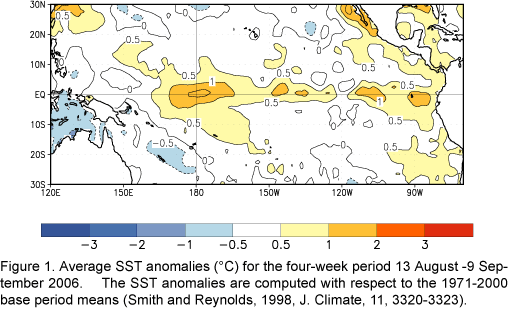 There's a mild El Nino event brewing in the Pacific. The forecasters have suspected as much for the past couple months. The latest data (right) showing abnormally warm water in the central and eastern Equatorial Pacific led to the El Nino forecast by NOAA.
This is not expected to be anything like the strong 1998 El Nino event. But we will probably see some of the climate effects of El Nino, including dry weather in Australia and the western Pacific, a milder winter and spring in central North America and wet weather in Florida and the Gulf Coast.
The warming in the central Pacific could impact the reefs there. The coral bleaching event I surveyed in western Kiribati (intersection of the equator and the dateline, right under the orange spot in above map) in 2004 occurred after a very similar build-up of ocean temperatures from July-December. Bleaching is a paling caused by a breakdown of the symbiosis between the coral, the reef-building animal, and the colourful algae that lives in the coral's tissue. If the conditions that cause bleaching persist, like abnormally ocean waters, the corals can die. That's not the end of the story, though. The reefs can recover - the evidence from my colleagues suggests the corals have been returning after the high mortality we measured. The ecological questions are more how the community changes due to a bleaching event, and what happens if the disturbances (ie. the warm water) occur more frequently than in the past.
A couple weeks ago, NOAA Coral Reef Watch put out a bleaching warning for western Kiribati and the U.S. islands in the area (thanks in small part to my ranting). It will be interested to see, if the temperature stress continues to build, how the coral community responds. There is evidence that some corals can acclimate or adapt to warming ocean temperatures, by shifting the symbiosis to more temperature-tolerant algae. This may be an interesting test. Now if only someone wants to fund my research proposal...
Wednesday, September 13, 2006
More on climate change and tropical ocean temperatures
There's yet another new study about the contribution of human-induced climate change to ocean warming in the regions of hurricane development ("tropical cyclogenesis regions"). This one, by Ben Santer and colleagues in the Proceedings of the National Academy of Sciences (check Sept 12), uses the results from a number of different climate model simulations conducted for the upcoming IPCC assessment to estimate the amount of warming caused by natural or background climate variability and by external (human) forcing.
Media coverage of observed climate warming, especially related to hurricanes, tends to suggest that are two possible, but distinct, causes: forcing from the increase in greenhouse gases, or natural climate variability. Critics or skeptics of climate change science are often interviewed and say the observed warming is due to natural variability. This claim sets up a straw man: an assumption that climate scientists think that observed warming is entirely due to greenhouse gases or that the models that climate scientists use do not consider the effect of natural variability.
Nothing could be further from the truth. Much of the energy in the climate change science community is devoted to using climate models to examine exactly this problem: what fraction of observed warming over the past century can be attributed to natural variability, or to the increase in greenhouse gas concentrations? This "climate change attribution" is done not just by running climate models with, and without, human forcings (GHG emissions) and then comparing the results to the historical temperature record, but by also analyzing "control runs" of the models. In a control run, the model is run for hundreds or thousands of "years" to estimate the background climate variability (in the model). The control run is contrasted with observations to gauge ability of the model to represent different "modes" of variability (ie. year-to-year, decadal, multi-decadal). With knowledge of the models' strengths and shortcomings, detailed statistical analysis can then used to tease out the role of natural variability and of greenhouse gas emissions in the observed warming.
If your work involves climate science, or you are just interested in the subject of climate change attribution or specifically in the hurricane issue, I recommend reading the Santer et al paper itself to get a sense of the strengths of this form of analysis. You can also read the nice summary of the subject on Realclimate.
Climate change in the Economist
The latest issue of the Economist has a comprehensive special report on climate change. While a few parts of the report suffers from the same old problems - blurring the line between evaluating the science and evaluating what to do about the science (the intro is just bizarre), the "he said, she said" method of reporting that inevitably gives too much creedence to the few critics of the science, loose use of the word uncertainty - it is on the whole well done.
What really sets this report apart from others that harp about scientific uncertainty is the conclusion: "The uncertainty surrounding climate change argues for action, not inaction."
The lead editorial calls for the introduction of either a carbon tax (more efficient) or a carbon cap-and-trade system (more likely). It then takes aim at the Bush Administration:
"Although George Bush now argues that America needs to wean itself off its dependency on oil, his administration still refuses to take serious action. But other Americans are moving. California's state assembly has just passed tough Kyoto-style targets. Many businesses, fearing that they will end up having to deal with a patchwork of state-level measures, now want federal controls. And conservative America, once solidly sceptical, is now split over the issue, as Christians concerned about mankind's stewardship of the Earth, neo-cons keen to reduce America's dependency on the Middle East and farmers who see alternative energy as a new potential source of energy come round to the idea of cutting down on carbon.
Mr Bush has got two years left in the job. He would like to be remembered as a straightshooter who did the right thing. Tackling climate change would be one way to do that."
Sunday, September 10, 2006
A vegetarian fishery
The novelist Paul Greenberg had a terrific op-ed about sustainable fisheries in last week's NY Times. Take a look, if you haven't already. The key premise behind the popular sustainable seafood guides - that we should eat and farm 'vegetarian' fish - is rarely articulated this well:
"... go vegetarian, in a manner of speaking. Farmed fish have gotten a bad name in recent years — even while our production of them has grown to rival the wild fish harvest, as the Food and Agriculture Organization reported this week. This is mostly because the farmed fish we eat in the West are carnivores. Raising carnivores like salmon requires the capture of wild prey fish that wild fish also consume. By eating farmed carnivores we rob Peter to pay Paul, stealing the food source for wild fish and feeding them to farmed."
That's why farmed tilapia and carp are deemed OK by the Monterey Bay Aquarium seafood guide (and others) but farmed salmon is not. Farming salmon is like using (carnivorous) wolves rather than (vegetarian) cattle as livestock.
Greenberg applies a similar argument to some threatened pelagic (open-ocean) fisheries:
"... don’t eat the big fish. Dining on a 500-pound bluefin tuna is the seafood equivalent of driving a Hummer. Ten pounds of little fish are required to produce one pound of bluefin and all the pollutants contained in a tuna’s prey “bio-concentrate” in a tuna’s flesh, making it a particularly compromised animal, chemically speaking. And because it takes so many little fish to make a big fish, the sea can sustain only a relatively small amount of large fish."
Saturday, September 09, 2006
Pros and cons of the ethanol business
On Friday, the NY Times business section had an informative story about engineering of crops to produce ethanol. It is a good reminder that biofuels are not an immediate solution to the American dependency on oil or the greenhouse gas burden.
As the article points out, the U.S. Energy Department reports that even if entire U.S. corn crop, which is about 40% of the world's corn, were used to produce ethanol, it would only replace 15% of U.S. petroleum use. The key to future ethanol production is likely to be genetic engineering: adding enzymes to corn to aid the conversion of plant starches to sugars (fermented to become ethanol) and improving yields of grasses whose cellulose can be converted to fuel. The article reviews the benefits and some of the dangers of crop engineering, like cross-pollination with wild species (good luck finding non-engineering canola anymore).
Friday, September 08, 2006
A cause for concern
A recent survey reports that 64% of the CEOs of small and medium-sized US businesses are “concerned about global warming”. I would hardly call this cause for celebration. Being concerned is very different from feeling that climate change is a significant problem requiring immediate action.
As the head of Vistage International, the CEO membership organization (talk about an exclusive club) that conducted the survey, said: “The question is whether that concern will translate to the willingness to support legislation and regulatory requirements that impact their businesses."
Wednesday, September 06, 2006
Optimism, on one side of the border
There has been no shortage of positive developments in the US climate change and emissions control policy.
You can sense the optimism flowing from California’s decision to enact the most comprehensive greenhouse gas emission reduction policy in the U.S. This state is, after all, governed by the man personally responsible for the creation of the Hummer: Arnold Schwarzenegger’s interest in purchasing a military Humvee led GM to produce the vehicle that became the totem of inefficiency to environmentalists nation-wide.
The cover story in the most recent E / the Environment magazine boasts of all the emission reduction initiatives in U.S. cities like Seattle, Chicago and San Francisco (and also in countries like Iceland, Sweden, Germany and the Czech Republic).
With so much movement by individual cities and states, most experts now assume that the next administration in the US – whether Republican or Democrat – will enact a national emissions policy. In a recent speech, Al Gore predicted that the Bush Administration may change their policy on climate change before leaving office.
It is enough to make one optimistic about North America finally attacking climate change.
Make that just America. The Conservative government in Canada is set to announce the new environmental agenda (“Green Plan II”). It will include a much-needed new program to combat smog-forming emissions and air quality. But the CBC reports there may be nothing concrete on GHG emissions for years. The government’s decision to focus on air quality and largely ignore climate change was apparently seconded by focus groups across the country over the summer (were the focus groups asked either/or questions? GHG emissions and smog-forming pollutants come from many of the same sources… it’d be logical to combine the two policies, not play them off one another).
Maybe Californian Robin Williams was right: comedy is acting out optimism.
Tuesday, September 05, 2006
Investing in efficiency
People like to ask me about environmentally or ‘climatically’ responsible investing, either out of a) genuine interest in supporting companies that are taking action on climate change, or b) the belief that I may have some savvy investment tips (er, given the number of my possessions held together by duct tape, I'd say no).
I did, however, recently come across this interesting study on the concept of climatically responsible investing. It uses a metric originally designed to measure social responsibility to evaluates how six companies, including BP, Shell and a random university, measure up in efforts to combat climate change (pdf).
The study is interesting - and amusing. The university finishes last. Though I suspect it is not the case with the university, the scoring method - relative improvement from each company’s independent starting point – could bias against companies that were already energy efficient.
A similar point can be made about international climate policy. Emissions reductions should be easier in places like the North America, than in Europe and Japan, which were already more energy or GHG-efficient. The fact that emissions reduction policy has been less acceptable in North America suggests that the main obstacle is culture, not opportunity.
Monday, August 28, 2006
China, the US and the typhoons
The devastating impact of the typhoons in China – 15 million, yes, million, people may be homeless – is a reminder that the majority of Chinese population is still quite poor.
Opponents of the Kyoto Protocol love to point out that the rapid economic growth of Kyoto-exempt China. The greenhouse gas (GHG) emissions from China are expected to surpass that of the United States sometime in the next 20-30 years.
As well they should. There are 1.3 billion people in China. Even if China caught up to the US in total emissions, the average Chinese would still be responsible for less than one quarter of the emissions of the average American (currently ~21 tons CO2 eq./year*).
So let’s ease off on the rhetoric. No doubt, China will need to be a part of long-term international effort to reduce GHG emissions. That will mean China shifting away from coal burning and from the increasing reliance on imported oil. Sound familiar? The best thing North Americans can do right now is set a good precedent.
And yell and scream about how to help the victims of the typhoons.
* All GHG emissions reported in units of CO2 ‘equivalent’. The gases are summed by factoring in their global warming potential relative to CO2. There’s an even bigger gap between the US and China in CO2 emissions alone.
Friday, August 25, 2006
Over 15 million Chinese left homeless from typhoons
I've started watching Spike Lee's film "When the Levees Broke: A Requiem in Four Acts", about Hurricane Katrina, last night. This morning, I found the only wire story in the today's western Press about the recent typhoons in China:
SHANGHAI, China (AP) -- Communities in southeastern China are straining to resettle more than 15 million people left homeless by four devastating typhoons in recent months, the official Xinhua News Agency reported Friday.
The storms caused $3.6 billion in direct damage, Xinhua said, citing provincial officials in Fujian, the province worst hit by the disasters. The most costly damage was to businesses, farms, communications networks and water conservation projects. It said the central government had allocated only $7.5 million in relief funds for Fujian and neighboring Zhejiang province.
The most recent storm, Saomai, hit Fujian in mid-August, killing 441 people. It was the worst storm since record-keeping began in 1949, according to the government. Each summer brings catastrophic weather to China, usually in the form of torrential rains and tropical storms. But this year, while coastal regions are rebuilding from floods and typhoons, many inland areas are enduring their worst drought in decades.
That's about 100 000 people a word. You’d hope, with the anniversary of Hurricane Katrina coming next week, the devastating impact of the recent typhoons in China would garner more attention here.
Where's the outrage over this? $7.5 million in relief funds from the Chinese government? 50 cents per person made homeless? That makes the federal response to Hurricane Katrina look generous.
If you want to help, the Hong Kong Red Cross is accepting donations for typhoon relief.
Tuesday, August 22, 2006
60%? I'll see that, and raise you 5%
A number, dare I say a plethora, of long-term greenhouse gas (GHG) emissions reductions plans have been proposed lately by politicians in the US, the UK and Canada.
Tony Blair got the ball rolling a couple years ago when he called for the UK to reduce GHG emissions by 60% below 1990 levels by the year 2050. This year, California Gov. Schwarzenegger (I’ll always get a kick out of writing that, seriously, who thought that two of the stars of Predator would become governors?) proposed GHG targets for California of 1990 levels by 2020, and 80% below 1990 levels by 2050. The CA legislature is set to debate a very similar proposal by a rival Democrat. The vote should happen for the Legislature breaks on Aug. 31st.
The proposals just keep coming:
- Oregon and New Mexico: 75% below 1990 levels by 2050.
- John Kerry (US Senate): 65% below 2000 levels by 2050.
- The Safe Climate Act (US House of Representatives): 80% below 1990 levels by 2050.
The Pew Center even put together a map.
The trend of tossing out big numbers has spread across the border into Canada. Michael Ignatieff, the Canadian MP and candidate for the leadership of the Liberal Party, has called to reduce GHG emissions by 50% below 1990 levels by the year 2050. The other leadership contenders, especially former Environment Minister Stéphane Dion and Bob Rae, are also expected to release similar plans in the coming days. It can be comical to hear Canadian politicians propose substantial long-term emissions reductions, when the more modest Kyoto goals have been ignored. Although, one could argue that the mistake by many on both sides of the aisle in Canada was viewing Kyoto as an endpoint, rather than the first step on a longer path to stabilization.
I imagine you’ll see a similar climatic chest-bumping when the battle for the Democratic nomination begins in earnest next year.
There is some real logic behind the various targets. The goal in designing a long-term policy should be an optimal path of emissions – the rate of flow into the bathtub each year – that ensures the level of GHG in the atmosphere – the amount of water in the tub – stays within a limit deemed acceptable. To use the lingo, the goal is to stabilize GHG concentrations at a level that avoids dangerous anthropogenic interference (DAI) in the climate system.
Now there has been plenty of discussion in the climate science and policy community as to what should constitute DAI. The most commonly proposals are (enough residual warming in the climate system to cause) the collapse of an ice sheet, a shift in ocean circulation, extreme or recurrent drought threatening food production, or widespread damage to the world’s coral reefs. The definition of what is ‘dangerous’ allows some back-calculating or modeling of the ‘allowable’ emissions (e.g. to 2050).
Often ignored in the discussion is the fact that, since GHGs like carbon dioxide can remain in the atmosphere for a long time, the path of emissions over time, not just the end result, also matters. Most of the well-conceived policy proposals include a series of targets chosen with the aid of simple climate models.
It appears that the different proposals are aimed at stabilizing CO2 at 500-550 ppm in the atmosphere, roughly a doubling of the pre-industrial level. My guess is the scientific advisors in each case argued that further increases would cause the climate to warm past thresholds for the ice sheets and the slowdown of the ocean’s thermohaline circulation (I doubt corals got much play). An optimist could claim the difference between the endpoints of the various plans – 65%, 80%, 50%, 75%, 60% -- was simply the choice of model in each case.
It is crucial to set the right targets. But, in the end, designing the policy is the easy part. Voters in the Liberal party, in California, and in the 2008 primaries, should not be seduced by the candidate offers to jump the highest, but the candidate that offers the best implementation plan.
Monday, August 21, 2006
A monday morning read
If you need a break this morning, read this short article from Hindustan Times (thanks Vaishali!) about the irony of some recommended energy-saving measures.
And if you want a longer break, I've got a game for you. Grab some provisions, maybe a headlamp, and descend down into the Byzantine network of Canadian government web pages in search of the few pages that still mention climate change. There are a few good pages about climate science left. It just takes a lot of backtracking, redirecting and illogical linking to get there. Don't fall for those plentiful links to the "climate change web site". Way too obvious.
Bonus marks if you can get to the BC / Yukon climate change page with a pile of links at the bottom. Go one by one through the federal government links. That reminded me of the experience of trying to find something to eat in Princeton after 9:30 pm.
Friday, August 18, 2006
Where Canadians can't learn about climate change
A Reuters piece circulating the regular media features a short list of "links to Web sites of governments, climate experts, environmental groups and companies with tips for lifestyle changes to cut individuals' use of oil, coal and natural gas."
Most of the links - the US EPA, the European Community, WWF, etc - contain the usual list of recommended personal actions like cycling rather than driving, etc.
You'll notice that for Canada, there is only a link to the government's GHG emissions calculator. Why no tips for personal action from Canada?
The Conservative government dismantled the climate change site. People hoping to visit what was a highly regarded site explaining the science of climate change are now told their interest in "the important issue" is appreciated, and directed to Environment Canada's Green Lane site, where the climate change page contains an Orwellian message that, as previously reported, does not actually mention climate change.
By contrast, the UK Conservative party is pushing for action on climate change through a new transportation policy.
Thursday, August 17, 2006
What we don't know
David Suzuki's latest column talks about how most of the public still knows very little about climate change:
"Recently, my foundation conducted a focus group about global warming to see where people are at in their understanding of this complex and challenging problem. The results? Let's just say they were disconcerting, to say the least... Apparently, according to the average Joe, global warming is happening because we've created a hole in the ozone layer, allowing the sun's rays to enter the atmosphere and heat up the earth -- or something like that. The cause of the problem is cars, or airplanes, or aerosol cans. No one really knows for sure."
The tone is a bit flippant, but the point is important. Those of us in the scientific community should not assume that all the headlines and all the films means people understand the very basics of climate change.
There's a segment of people working to communicate of the urgency of climate change who argue that educating the public any more about the science won't make a difference. The problem is, they are assuming most of the public has some basic level of knowledge. Unless you're under 30 or a scientist, it's unlikely you learned the basic concepts in any organized fashion (i.e., in school). The information is coming in small snippets in newspapers, on television, etc. It is not surprising that people still get the ozone hole and climate change confused. That's why we need things like the beginning of Gore's movie (that explaining the basics of the greenhouse effect).
Now, if only we can do something about the pop-up ads in the ENN page with Suzuki's column. Drag your mouse over the word "ozone", as in hole in the ozone layer, and up pops an ad for a home air purifier called an "ozone generator". Brilliant. The power of search engines I guess. They might want to point out the device won't help repair the ozone layer.
Wednesday, August 16, 2006
More on hurricanes
There is another new paper positing a link between climate change and Atlantic hurricanes. The study, to be published in Geophysical Research Letters next week (available on his website), uses a statistical test called Granger causality to evaluate whether an increase in global temperatures are forcing the increase Atlantic Ocean temperatures (and, in turn, hurricane intensity) or vice versa.
The analysis is on its own not conclusive proof. But it is an interesting addition to the growing literature on the subject. For a news summary, check here.
While the evidence for a climate change and hurricanes link has grown, the good news is that the Atlantic hurricane season has been relatively quiet thus far. Most of the forecasts have been downgraded. For example, William Gray’s forecast now calls for 15 named storms (three so far) and seven hurricanes. The next two months are the heart of the Atlantic hurricane season.
Lest we self-obsessed North Americans forget, hurricanes do happen elsewhere, they just go by other names (typhoons in the N Pacific, cyclones in the S Pacific). The strongest typhoon in 50 years killed over 100 people in China last week. The Asian media has been mentioning a possible link between climate change and an in the strength of typhoons, but like here, the coverage tends to depend on the news source (a pro, a con).
Monday, August 14, 2006
"Mr. Cool"
The weekend edition of the Globe and Mail featured a terrific feature by Charles Montgomery on the shadowy world of Canadian climate "skeptics" like Tim Ball. A must read.
Spreading the wor(l)d
The Climate Project, a program initiated by Al Gore, is looking to train people to deliver a version of his now famous presentation that formed the basis of “An Inconvenient Truth” to community groups. Just fill out an application online.
It is a fine idea. I’ll be curious whether it works well. There’s always the danger that presenters will be seen as propagandists. Or that, with just the one week’s training, some the presenters will not be equipped to answer questions about the science behind climate change or the strengths and pitfalls of different energy solutions. Even after doing a PhD and working in the field for several years, I still get questions I’m not certain how to answer.
The Greenhouse Network, a grassroots organization based at Lewis and Clark College in Portland, has been sponsoring a similar training program for years now. They hold informative and fun volunteer training sessions each year. The participants are expected to return home afterwards and organize presentations to local students, community groups, etc. I’ve always liked the GHN approach. It is more or less based on a training program for civil rights activists in the 1950s and 1960s run by the Highlander Education and Research Center.
This all brings to mind the state of climate “activism”. When I went to GHN workshop a few years ago, the goal was mostly to educate college and university students about some of the basic facts of climate science and climate change. The thought was that, like in the past, campuses are the place to start a grassroots movement. And, no doubt, there has in the years since been a push for energy efficiency and emissions reductions on many college campuses and some lobbying by student groups for a national emissions reduction policy (see here).
Still, I don’t sense nearly the “energy” on college campuses over climate change that there was over issues, whether civil rights, war or even other environmental issues, in the decades past. To be blunt, where are the protests? Whether you think protests are an effective way to effect change, or you think the issue is worthy of such energy, or not, isn’t it surprising that with all the supposed interest in climate change there are not more students are marching in the streets?
Maybe the issue is too different, too complex, too nuanced (it can be said that there is no one “bad guy”, though many on college campuses would be happy to paste a smirking Bush photo on the poster)? Maybe the people most likely to organize such activities are focused on the war in Iraq? Maybe blogs are the sit-ins of the 21st century?
Or maybe the times have just changed, and students are now encouraged to work within the system rather than to challenge the system. Just a thought, feel free to write in and tell me I’m wrong.
Sunday, August 13, 2006
A couple things you can do
Here are a couple web-based energy efficiency campaigns that are easy to join.
Environmental Defense is hoping to get one million light bulbs switched to compact fluorescents. There are already over 110,000 pledges.
Campaign Earth out of Colorado runs a CO2 'challenge of the month' campaign. This month's challenge is an easy sell: reduce the junk mail and catalogs coming to your home. It provides some tips on what to do with all those catalogs and how to stop junk mail at the source.
If you come across other "action" campaigns, let me know.
Friday, August 11, 2006
Who killed the electric car?
Last night, I went to a showing of the surprisingly good documentary “Who killed the electric car?”. I encourage other to go; it is more of a fascinating whodunit than an Michael Moore-esque attack on car and oil companies.
I was not fond of electric car movement in the1990s because, at the time, too many uninformed organizations were overstating the climate benefits of electric vehicles. You’ve probably heard this argument before: if your electricity comes from a coal-burning power station, as is the case across much of the US, charging the car will emit more carbon dioxide than driving a normal car with efficient internal combustion engine. As such, any push for electric vehicles would have more to do with switching from oil, a fuel the US imports, to coal, a fuel the US has in abundance, than addressing climate change.
Nonetheless, I have always found it curious that although some electric cars were produced by GM, Ford and others, I never ever encounter one on the road.
I actually saw a Delorean a few weeks ago. But a GM EV1? Not once.
Where did they go? The movie answers that question, and gives some insight into why Toyota and Honda are passing GM and Ford.
Thursday, August 10, 2006
Tradable emissions quotas
To Manchester? That’ll be 10 pounds for the ticket, and 15 kilos of carbon credits.
As I mentioned in passing last week, the British environment secretary David Miliband floated the idea of implementing a personal carbon trading system. The idea is that each person gets an annual carbon allowance. Whenever you buy gas, pay an electrical bill, etc., you would hand over some carbon credits. If you run out of credits, you would have to buy more from the government. The price of the credits would be determined by trading on the government-run market.
The concept itself is not new. Tradable energy quotas (TEQs), also known as domestic trading quotas, were first proposed several years ago by academics in the UK; a bill aimed at raising awareness for the idea was even proposed in the House of Commons.
Most people assume TEQs would work like a progressive carbon tax. The wealthy who consume more energy could buy credits, from a government-run market, in turn, essentially subsidizing people with less-carbon intensive lifestyles. From Miliband’s speech in the House:
“Imagine your neighbourhood. Each neighbour receives the same free entitlement to a certain number of carbon points. The family next door has an SUV and realise they are going to have to buy more carbon points. So instead they decide to trade in the SUV for a hybrid car. They save 2.2 tonnes of carbon each year. They then sell their carbon points back to the bank and share the dividends of environmental growth.
The granny next door doesn’t drive and doesn’t do much air travel. So she has spare carbon points that she can sell. But she doesn’t want to be handling two currencies so she cashes in all her carbon permits as soon as she receives them. When she pays her electricity bill, her energy company builds in the price of carbon to her total bill. She simply pays carbon as she uses it. At the end of the year she finds herself better off.”
For the moment, it is only a proposal. I don’t envision the UK actually enacting a TEQ system in the near future. And I can’t imagine the US or Canada agreeing to issue necessary ID / carbon credit cards to every citizen, let alone agree to further tax personal energy use.
Nevertheless, I’m surprised more people aren’t talking about the idea, even here in Hummer-land. Almost all the N. American environmental organizations promote the importance of both individual action and the market-based mechanisms change, like carbon trading between businesses, states or countries. So where are the environmental organizations on TEQs?
I’m surprised that, at least as a publicity stunt, no group has set up a pilot individual carbon trading program. Issue credits to volunteers, and get them to keep track of their energy bills, fuel use, maybe food purchases, etc. Maybe Chicago Climate Exchange, the home game?
Tuesday, August 08, 2006
More on the Dead Zone
I just returned from a mostly power-less trip to Canada (no computer, no lights, no posting on the blog), and see this news from a colleague in my inbox:
Scientists Eugene Turner and Nancy Rabalais in Lousiana report that the Dead Zone in the Gulf of Mexico has reached a mid-summer size of 17,255 sq. km (6662 sq. mi). This is within 1% of the prediction based on the level of nitrogen in the Mississippi River during the spring.
The Washington Post and other news outlets are reporting, the accuracy of this year's prediction is further evidence that the growth of the Dead Zone is fuelled by nitrogen from the Mississippi River, much of which originates as fertilizer applied to crops in the middle of the U.S. It's goof to see this publicized in the press. I hope readers of the article understand that proof of the Mississippi nitrogen / Gulf hypoxia link lies not in this one accurate forecast, but in the years of study by Turner, Rabalais and many others.
Newspaper editors love to compare the size of the Dead Zone to that of US states. Usually it is New Jersey or Delaware, or a combination of Connecticut and Rhode Island. In a nod to current events, and the power of Google, "almost the size of Israel" now seems to be cropping up.
Thursday, August 03, 2006
Climate for July tests positive
The latest data shows last month may have been the warmest July on record in the conterminous U.S. Don't pop open the champagne quite yet, the verdict is not official until after a bit more data crunching, and the results of Floyd Landis' B sample.
The popular media seems almost as giddy to report temperature records as it is to report positive drug tests by popular athletes. On Wednesday, the NY Times had a detailed explanation of the how carbon isotope, or isotope fractionation, is used to determined whether the testosterone in an athlete's blood was synthetic. If such effort went into explaining things like the reconstruction of past climates from ice cores, using similar logic but with oxygen isotopes, maybe the public would have a better appreciation for climate science.
Wednesday, August 02, 2006
Common sense wilts in the heat
The thermostat is expected to reach 39 C today in Princeton, with a heat index in the mid 40s C.
You can convert that to Fahrenheit here. I’ve decided from now on to report only in Celsius, not out of stubborn Canadian-ness, but because it is absolutely ridiculous this country refuses to adopt the more sensible temperature scale used by the rest of the planet. Er, excuse me, sir, how many furlongs is it to New York?
There are three other aspects of the response to the current heatwave that grate at me:
1. Last week, a group of top hurricane experts on both sides of the global warming debate released statement reminding people that global warming is not the only problem:
“While the debate on this issue is of considerable scientific and societal interest and concern, it should in no event detract from the main hurricane problem facing the United States: the ever-growing concentration of population and wealth in vulnerable coastal regions…. We are optimistic that continued research will eventually resolve much of the current controversy over the effect of climate change on hurricanes. But the more urgent problem of our lemming-like march to the sea requires immediate and sustained attention.”
A similar argument needs to made about the heatwave in eastern North America. With near-record temperatures and many record nighttime temperatures - the second being a staple of climate change predictions - a lot of people want to lay all the blame for what happens as a consequence of the heatwave solely on global warming.
Over a hundred people died in the recent California heat wave, more deaths have been reported as this week's heat swept across the the central US, the northeastern US and southern Canada. And people will probably die as a result of today’s heat, but the coroner will not write global warming on the death certificate. Not because it is impossible to definitely attribute a particular heat wave to a long-term warming trend, but because even if you could, the deaths are still preventable.
The lack of public attention to the danger of heatwaves is the subject of a smart, short article on Slate by Eric Klinenberg, author of the book "Heat Wave: A Social Autopsy of Disaster in Chicago" about the 1995 heatwave that claimed 739 lives in Chicago:
“…dangerous heat always comes announced, and it's fairly easy to prevent human damage. Victims of heat tend to wilt gradually, alone and at home, out of touch with family, friends, and social-service providers who could save their lives simply by treating them with water or bringing them to an air-conditioned place.”
The good news is we can learn from past mistakes. Almost 15, 000 people died in France during the 2003 heat wave, mostly elderly without air conditioning and family support. When another (slightly cooler) heat wave struck last month, the French government was ready with a heat awareness plan that included cooling stations, media campaigns and more staff in hospitals. There were still more than 60 deaths across France: hardly forgivable, but a vast improvement over the 2003 disaster.
So we’re in the middle of a heat wave. Is it global warming? Maybe, but right now, even I think that’s wrong question.
2. The radio announcer this morning suggested turning the thermostat up to roughly 25.56 C (again, look it up if you have to) in order to ease pressure on the power grid. The recommendation, coming directly from the local and state government, reflect a complete misunderstanding of the concept of conservation. If you can do that today, why not every day (hello Princeton?)? If you are releasing such a statement, why not mention the energy and cost savings of always keeping you’re a/c set at the higher, but still very comfortable, temperature?
Given the lack of conservation, the one program that makes a bit of sense is the “Peak Saver” started by some city power grids like Toronto Hydro. Basically, they install a switch on your central a/c that the power system flips on and off to help manage electricity demand. You'll barely notice any difference in the household temperature. The Toronto program probably saved the city, which has been hopeless at curbing energy use, from setting a energy use record yesterday.
3. Finally, during heat waves, the public information campaigns need to urge people to cut down on unnecessary car trips. These hot, humid days are naturally susceptible to high smog levels, people should be reminded to not make it any worse.
Monday, July 31, 2006
Monday (noon) mash
Getting caught up on some climate news:
Hurricanes: A paper in last week’s Science suggests the reported trend in hurricane intensity over the past thirty years could be an artefact of changes in the technology used to measure hurricane winds (also see news coverage). It is not disputing the increase in Atlantic Ocean temperatures or the warmer water = fuel for hurricane theory, rather questioning the dependability of the observed wind data. I imagine there’ll be a bit dispute about whether the paper is correct or not. Regardless, it is a good reminder that we always have to think about measurement techniques and how they may have changed over time (the #1 reason sea level rise is probably under-reported in Kiribati).
Dead Zones: Scientists are reporting the growth of a large hypoxic or “dead zone” off the Oregon Coast that is killing fish and other marine life. The emergence of the low-oxygen waters is related to winds and warm weather delivering the nutrients that promote algae production. The difference between this and the Gulf of Mexico “dead zone” is the source of nutrients: in the Gulf, the nutrients come from the Mississippi River, off the Oregon coast, deeper nutrient-rich water is bring brought to the surface.
Climate change and plant life: If you’re interested in the how climate change could affect plant growth and the like, take a look at the series of presentations made available by the Australian Government’s Cooperative Research Centre for GHG Accounting (which is just now closing up shop after seven years).
Finally, "Mum, can I have a raise in my allowance?": The British Environment Secretary has proposed using trade-able personal carbon emissions ‘allowances’ to reduce emissions (reported in Nature and ENN). It’s a clever idea, but would be a tough sell in North America.
Friday, July 28, 2006
Size of the Dead Zone
The "Dead Zone" in the Gulf of Mexico, the area of low-oxygen waters fuelled by nitrogen from the Mississippi River, is expected to be 17,353 km2 this summer according to scientists at NOAA and a consortium of Louisiana Universities.
The Mississippi dumps a massive amount of nitrogen, largely in the form of the soluble ion nitrate, into the Gulf each spring. It promotes the growth of a lot of algae, which eventually sinks to the bottom and decomposes. This consumes much of the oxygen in the bottom waters, making life tough for bottom-dwelling fish and creatures like shrimp.
The nitrogen mostly comes from farms in the Midwest and central US, particularly from practices like applying lots of fertilizer to corn (you can read a bit about this on my site). But the amount that ends up at the mouth of the Mississippi in a given year also a lot to do with the weather. To put it simply, if it rains very hard in the Corn Belt, more nitrogen leaches out of the soil and runs into the rivers and streams.
The group of scientists is able to roughly forecasts of the extent of hypoxia each year based on the amount of nitrate measured in the Mississippi River during the spring [together with data from the previous year, since nitrogen also gets recycled in the coastal sediments]. My own work is examining whether you can take these forecasts back a step further, by looking at the rainfall in certain places.
The way to combat the Dead Zone is to reduce the input of nitrogen in the Mississippi. It won't be easy. Nitrogen levels probably need to be reduced by 50-60%. That means changing the way crops are grown - something I talked about in the "Surf or Turf" study - and/or embark on an extensive wetland restoration program.
Otherwise, in a given year, there's always a chance that a hurricane will strike the area, and the strong wind and wave action will mix up the waters and replenish the bottom with oxygen (as Ivan did). But let's not hope for that.
Thursday, July 27, 2006
Amidst pages of reporting on the insanity in the Middle East, today's NY Times has an op-ed piece by Peter Doran, whose research on Antarctic temperatures trends has been misinterpreted and misused by the media and by those skeptical of climate change for several years (non-subscribers can read it here).
Doran's work reporting cooling in parts of Antarctica and other studies reporting "thickening" of Antarctic and Greenland ice sheets have been twisted by groups like the Competitive Enterprise Institute to argue that global warming is not a concern (including the very entertaining "CO2 is life" campaign that aired in, hmm, only 14 states, randomly chosen I'm sure).
The NY Times article clears up some of the confusion.
Tuesday, July 25, 2006
The greening of Wal-Mart
A good deal of ecology and other “systems sciences” is devoted to understanding if systems (ecosystems, political systems) are controlled from the top down (the top predator, the government) or from the bottom up (the ants, the people, not to sound too Marxist here). Often, it is a bit of both. The government can never be too far ahead of the people, and vice versa.
Which brings me to the “greening” of Wal-Mart, that enemy of small businesses, labour activists, urban planners, environmentalists, and people who simply prefer walking or cycling to the store (it’s exhausting just riding across a Wal-Mart parking lot).
After a couple years of bad press and opinionated documentaries, the retail giant has undertaken a huge sustainability initiative. Before you roll your eyes, think about the numbers. It is the largest retailer in the world and the largest food distributor in the US. A decision by the Wal-Mart executives about not just what the stores sell, but how the company operates, could really transform the energy, food and transportation industries.
An article in the Washington Post provides some of the numbers:
“Wal-Mart has reduced its fuel use 8 percent by preventing its trucks from idling, saving $25 million over the past year while cutting 100,000 metric tons of emissions. It recently began buying organic cotton, and all 3,700 of its U.S. stores are using energy-efficient light bulbs. Wal-Mart is so big that a slight reduction in the packaging of one of its toy lines saved the company $2.4 million last year by cutting trucking costs, while saving 1,000 barrels of oil and 3,800 trees.”
I recommend reading the press release about the experimental superstore recently opened in McKinney, Texas (any Texans out there? I’d love to get a first hand account). The store features a wind turbine, solar panels, an urban forest, a wildflower meadow, pervious pavement (to allow runoff to infiltrate to the soil), water conservation initiatives, etc:
“To supplement the energy this store needs to operate, Wal-Mart has installed a 50-kilowatt wind turbine. The energy it produces will reduce the electricity consumption of this Supercenter by approximately 5 percent–enough energy to power 10 average size homes.”
Ok, it’s just one small turbine, but it makes you think. First, Wal-Mart stores themselves are bloody huge, and reducing their energy use is significant. Second, experiments like this could set an important precedent, for other retailers and for the market as a whole.
Let's say the chain goes full bore in the use and sale of use of energy efficient light bulbs. More will be manufactured, the price will drop, other retailers will also sell them, and in a few years, presto, the curly fry bulbs are the norm.
Personally, I don't like much of what Wal-mart does or represents, the pressure on smaller retailers, the drawing business away from downtown, the support of a car-based culture, the labour practices, etc. There is, however, no denying the huge potential for change when one company, like Wal-Mart, has such a disproportionate influence on our way of life.
Does that mean the system is top-down? The irony is that opposite may be true in this case. The primary reason Wal-Mart embarked on a "sustainability initiative" is that grassroots activism about the company's labour practices and the societal impact of the stores led to lots of bad press and bad financial projections for the company. Those at the top do need to change, no doubt, but perhaps the initiative can come from the people.
Monday, July 24, 2006
Monday morning mash
Lots out there to read today:
The author of the study reporting that “Not a single paper in a large sample of peer-reviewed scientific journals between 1993 and 2003 refuted the consensus position (on climate change)” defends herself and the study from attacks in the LA Times.
It’s good to see Reuters CNN address the oft-asked and always unanswerable question “is the heatwave due to climate change?” even if they still quote someone from the George C Marshall Institute (like you can’t ask an actual scientist to explain the difference between a one-off event and a trend?). The “heatwave” in question is really a series of heatwaves (in Europe and much of the Midwest and western US).
The media response is inspired in part by the latest NOAA climate update reporting that the first half of 2006 was the warmest in the US since records began in the 1890s. Exact rankings, which year was #1, are not really important, but almost every media organization botched the story… missing that Jan-June was the warmest ever in just the US, but the sixth-warmest worldwide.
And, if you’re interesting in the ongoing argument about the “hockey stick”, check out this post on realclimate last week. Frankly, I find the constant discussion and re-analysis of the 1000-year temperature reconstruction graph ridiculous, especially after the NAS report. Besides, even if there were a couple decades in the 1300s that were 0.2 Celsius warmer than the 1990s, that does not change the avalanche of evidence that the recent warming is in large part human-induced, and that it will accelerate without an effort to seriously reduce GHG emissions. Even Edward Wegman himself, the author of the latest report, basically agrees.
Friday, July 21, 2006
C'mon, you can say it, cli-mate ch-an-ge
The Congress plans to investigate whether Bush appointees edited of government reports on the scientific evidence for climate change. It's about time. From the NY Times:
"A House committee will examine accusations that political appointees in the Bush administration edited government reports on global warming to raise the level of uncertainty about research that points to a human cause. The Republican and Democratic leaders on the Government Reform Committee sent a letter to the White House Council on Environmental Quality requesting documents by Aug. 11 on the activities of Philip A. Cooney, a former lobbyist for the petroleum industry with no science background who edited climate reports while chief of staff of the environmental council. Mr. Cooney resigned last year shortly after the revisions were described in The New York Times."
ABC news also has a story about the climate change goings on in Washington. For the most part, it is terribly written and edited, an embarrassment for a major news organization ("Scientists told the House committee that humans are causing most of the earth's warming and the planet is 8 degrees to 10 degrees hotter than it was thousands of years ago."... uh, yeah, that was the last ice age... safe bet the scientists were arguing humans ended it). But the story does raise one important point about the future emissions from the many new coal-burning power plants that in the works. There are two important lags in slowing climate change. One, that the emissions today affect the atmosphere for some time. Second, that you can't change the energy infrastructure overnight. I'm surprised people aren't screaming more about the need to integrate carbon capture and storage technology into these new plants.
Also in politics, the Canadian government has put together a new environmental strategy that will be announced in the fall. The report in the Globe claims the new strategy will address smog-forming pollutants, greenhouse gases and adaptation to climate change. I'm skeptical that the Harper government will put together a plan with any teeth (i think the Globe editors are as well, given the sarcastic "thorny green issues" in the headline). After all, this is the government that recently removed all references to "climate change" from the official government climate change site (the new text is downright comical, like something out of the Onion; you can read more about this on desmogblog). But, hey, nothing I'd like more than to be wrong about this.
The one good thing Canadians can take out of this mess: in that in the effort to appear more environmental (and have a chance at a majority in the next election), the Harper government will at least take real action on smog-forming pollutants and perhaps some other environmental concerns. Climate change, well, I'd think to put together a policy, you must be willing to use the words.
Thursday, July 20, 2006
Atlas of the changing environment
The UN Environment Programme released this really amazing collection of presentations about global environmental change called "One Planet, One People: Atlas of the Changing Environment". The terrific collection of satellite imagery, aerial photos and figures depicting of environmental change can be viewed on the website (and downloaded free of charge).
I strongly recommend taking a look. My favourites are "Water and Lakes" (no surpise) with the before and after images from places like Lake Chad, the Dead Sea and the Marshlands in Iraq, the "North America" slideshow, with images depicting the sprawl of Las Vegas, oil drilling near Fort McMurray, Alberta (the tar sands) and what snow geese have done to the shoreline of Hudson's Bay, and the "Latin America" slideshow depicting the extent of deforestation in central and South America.
Wednesday, July 19, 2006
Canadian PM Stephen Harper - or Steve, as President Bush called him last week, to the consternation of Harper's mother - has stumbled upon a short explanation of his government's approach to Kyoto.
I'd call it a "talking point", if I did not hate that term for further greasing the side of politics towards nothing more than marketing (seriously, you use "talking points" when working the sales floor at a stereo store, not when discussing international policy). Anyway, here's one wording of Harper's explanation, from the G8 summit:
"We [Canada and the UK] don't differ on the philosophy of climate change. Our differences are the facts that our two countries are presented with," he told a news conference with Blair.
"Prime Minister Blair's government has taken steps over the years to reach its targets. The previous (Liberal) government of Canada did not do that and has put us in a position where they're not attainable. That doesn't mean we're abandoning the process. Canada is fully engaged."
The political equivalent of a child's 'not my fault, he started it.'
The funny thing is, on the surface, it's not a bad argument. Canada is in a difficult position because the Chretien government chose a target without proper consultation with the provinces and then made a lame effort to meet that target.
The problem is that the refusal of the now-ruling Conservative party to support action on Kyoto and emissions reductions in the past is a prime reason it became so difficult to meet the targets. It is like wasting tons of time complaining there you cannot finish some work before a deadline, then when it is not finished, saying, see, I told you we couldn't finish it.
If the government were truly "engaged" in the process, they would not have cancelled the existing emissions reductions programs and they would have developed a national greenhouse gas emissions reductions plan. Instead, the PM's statement is empty rhetoric.
Monday, July 17, 2006
Betting on climate
In a country enamoured with poker (next on ESPN: the World Series of Go Fish) and the almighty, er, once-mighty dollar, the idea of betting on global warming was inevitable. If you can lay a bet in Vegas on no only who will win the Super Bowl, but who will win the coin toss at the Super Bowl, it is only a matter of time before bookmakers are taking odds on the year a wave first makes it right across Funafuti Atoll.
As far as I know, the bookies aren't taking bets yet. But some financial heavy hitters are gambling on warm, catastrophic weather this summer.
Bloomberg news reported last week that hedge funds are now investing heavily in hurricane-related catastrophe bonds sold by insurance companies, which are looking to raise money after last year’s rough hurricane season. In other words, predicting a lot of Atlantic hurricane damage could make some people a lot of money.
I love this Gordon Gekko-ish quote from a hedge fund manager: "Our expert models tell us last year's estimates of hurricane risk need to be raised by 50 percent. That outlook is a great opportunity."
This is creepy even for a hedge fund, which from my rudimentary understanding of the investment world already lean just a bit toward the wrong end of the charitable-donation / mugging-an-elderly-woman-in-a-wheelchair continuum. Are investors out cheering reports of anomalously warm mid-Atlantic ocean temperatures?
Friday, July 14, 2006
Global warming documentary on Sunday
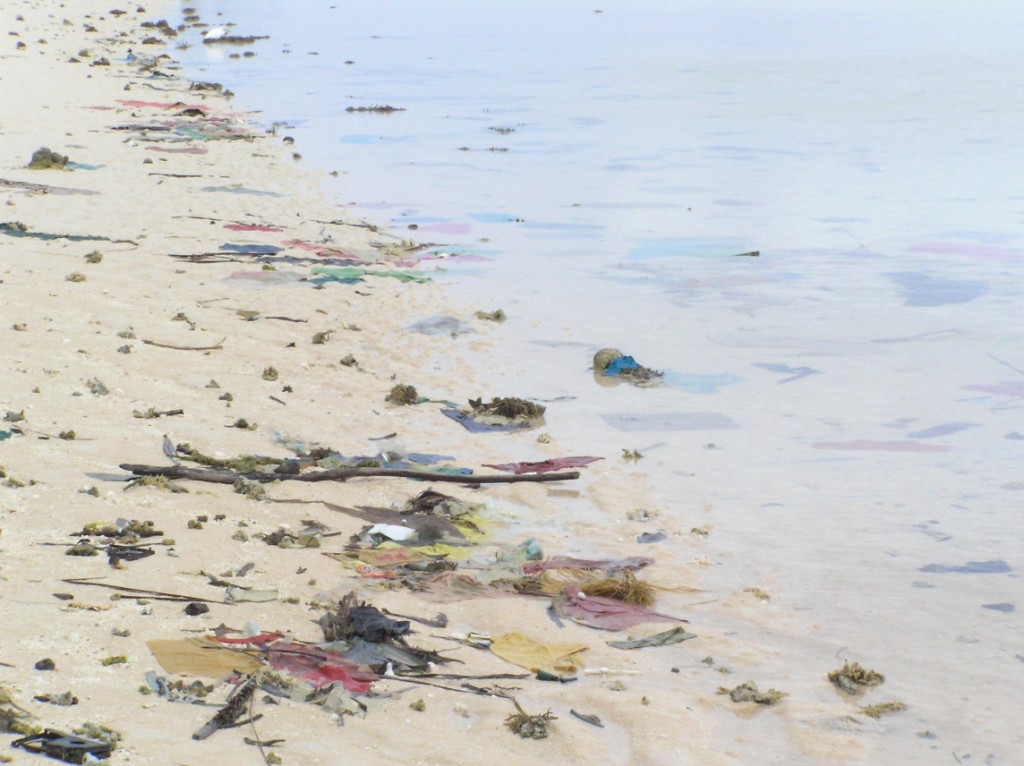 The documentary "Global Warming: What You Need to Know", hosted by Tom Brokaw, is on the Discovery Channel on Sunday night at 9 pm (anyone here have cable?). It features interviews with a number of scientists including Michael Oppenheimer and Steve Pacala from Princeton, footage from the Arctic, the Andes and the Pacific Island nation of Tuvalu, and discussion of what the average person can do to reduce emissions.
I'm glad to see more global warming films on television, though I must admit they can make me feel for the Tuvaluans for a reason other than climate change. If the threat of rising seas was not enough, the Tuvaulans have to deal with all the writers, reporters, photographers and camera crews all hoping to capture life on world's lowest lying country. Don't be fooled by the images in the documentary: the main atolls of place like Tuvalu and Kiribati are not ideal tropical vacation spots. Yes, they are palm-lined islands fringed by colourful reefs. They are also hot, crowded, narrow strips of land with few resources, few amenities and even fewer places to dispose of waste (the photo is a beach in Tarawa, the capital of Kiribati). You need to treat traveling to a Pacific atoll the way you should a national park: tread softly and pack out what you pack in. I'm very glad to see the plight of the small island nations in the Pacific publicized on TV. I just hope the film crew picked up after themselves.
Tuesday, July 11, 2006
More on "surf or turf"
As someone who rarely if ever eats meat, and has done research on how vegetarian diets are better for the environment, I'm often expected to be a staunch defender of animal rights.
I’m not. The “surf or turf” study I mention below offers a utilitarian argument for reducing beef consumption. Most of the beef available in North America is grain fed, and less efficient, in terms on energy required and pollution created, to produce.
I have no problem eating well-produced grass-fed beef or wild game (in fact I would not complain if someone culled the flocks of geese that ruin the grass behind my apartment)… though having only eaten a few morsels of meat in the last year, my stomach might protest.
If you’re interested in the different sides of these and other issues, I suggest reading this old interview with Peter Singer, an ethicist and writer at Princeton, in Salon about his book “The way we eat”.
While I don’t agree with many of Singer’s arguments equating animal and human rights - you can probably guess which ones – they are always good for inspiring a lively debate. At a dinner/debate a few months ago, I made an inflammatory comment about the hypocrisy of one of the ethicists’ criticism of meat eating that drew the ire of the room (along the lines of “you oppose eating meat only because you can see it, the steak is there on the plate; no one is complaining about the building we’re in replacing the habitat of many species, nor how the road you drove in on interrupts wildlife corridors; it’s not a pure argument for animals rights, it’s a way of assuaging misplaced guilt”). Thankfully ethicists tend to be non-violent.
Monday, July 10, 2006
Surf or turf?
The university issued a press release this morning about my research into how shifting away from meat production could help alleviate the pollution that causes the "Dead Zone" in the Gulf of Mexico. Take a look! The paper - "Surf or turf: A shift from feed to food cultivation could reduce nutrient flux to the Gulf of Mexico" - was published (online early) last week in the journal Global Environmental Change.
Why the shift in subjects? For my PhD thesis, I studied how the climate and land use (forest? corn-soybean rotation? wheat?) impact the loading of nitrogen into the Mississippi River and eventually into the Gulf of Mexico. The nitrogen in Mississippi River waters fuels the development of a large hypoxic zone, an area of extremly low-oxygen waters, in the Gulf each summer.
Among the conclusions from that research, is that the majority of the nitrogen comes from fertilizer applied in the central US, largely to corn. Most of the corn and other grains grown in the central US are sold for animal feed. It got me to thinking about the old adage that "eating closer to the sun" is better for the environment. The argument is that takes less energy (and causes less pollution) to raise a gram of vegetable protein, than beef protein, because of the various inefficiencies in the animal production chain.
I decided to do a quantitative test. Could shifting from feed to food production reduce nitrogen losses enough to minimize the size of the hypoxic zone? From there, I looked at a shift in diet and food production could be integrated with a more feasible nutrient management policy. The results was this study... and the end of years as a regular meat-eater.
Wednesday, July 05, 2006
Jim Hansen's "Threat to the Planet"
James Hansen from NASA has an article called "Threat to the Planet", ostensibly a review of the three recent climate change books The Weather Makers (Tim Flannery), Field Notes from a Catastrophe (Elizabeth Kolbert) and An Inconvenient Truth (Al Gore), in last week's NY Review of Books.
If you are not familiar with this weekly publication, it consists of analysis of topical (climate change, terrorism) or arcane (mid-18th century Prussian dance) subjects by leading scholars, disguised as reviews of new books. Though some of the articles are little more than intellectual chest-thumping that just screams for parody, others contain some of the best analysis of leading political issues.
In "The Threat to the Planet", which follows the tradition of barely mentioning the books being reviewed, Hansen articulates an important point about the need for both conservation and technology:
"To achieve the alternative scenario [slow/stop climate change] will require prompt gains in energy efficiencies so that the supply of conventional fossil fuels can be sustained until advanced technologies can be developed."
Those critical of conservation or energy efficiency measures as a central part of climate change mitigation should remember this point. Advanced energy technologies will be the long-term solution. We can probably all agree on that. However, given the time it will take to develop and implement such technologies, and the short time we have to begin serious emissions reductions in order to avoid dangerous changes in climate, conservation and energy efficiency measures are crucial in the short-term.


