The release of the IPCC report caused a short surge in public interest about climate change, according the Google Trends search data. Like a river after a flood, the waters have receded. Ten days later, the flood wave has dissipated, and search volume is back to baseline levels for the past year, or what hydrologists would call baseflow levels.
A longer view shows that this IPCC flood was much smaller than the last one. After the 2007 report was released, search activity for "IPCC" and "climate change" spiked. The report also left a legacy; searches remained at a higher level than before the 2007 report for several years, no doubt accentuated in late 2009 by the media coverage of and web obsession with "Climategate".
This comparison, however, may be misleading. The long-term trend smooths out the dips between the release of the reports from the different IPCC working groups. There are still two more IPCC reports to be released over the next year, starting with Working Group II's report on impacts, adaptation and vulnerability in January.
One thing that appears to have changed since 2007 is the preferred language. Global warming used to be a far more common search term than climate change; that gap has narrowed in recent years.
What has not changed is the relative public interest in the sister problem of ocean acidification. Search volume for ocean acidification has increased from essentially zero in the mid-2000s, but still pales in comparison to the volume for climate change and global warming. The search volume is too low, even today, to register on the same graph as climate change and global warming:
Monday, October 07, 2013
Has the flood of interest in the IPCC and climate change already dissipated?


Thursday, October 03, 2013
Sea level rise demonstrates continued global warming
 | |||
The consistency between the patterns of change in a number of independent ocean parameters enhances confidence in the assessment that the physical and biogeochemical state of the oceans has changed.... High agreement among multiple lines of evidence based on independent data and different methods provides high confidence in the observed increase in these global metrics of ocean change
The oceans show that global warming has continued apace. The lack of a slowdown in the rate of sea level change is of particular interest given the media coverage devoted to the perceived slowdown in the rate of surface temperature change. Since >90% of the excess heat in the climate system goes into the ocean, and a warmer ocean should expand, sea level rise is a good metric for tracking changes in the overall heat in the climate system. From a great summary by G. Bala:
Sea level rise is probably a powerful metric that integrates both the ocean heat content as well as the melt in the cryosphere as sea level rise is due to both the thermal expansion of the oceans from heating and the melt waters from glaciers and ice sheets... It is time for IPCC to recommend and encourage climate change discussions that are centred on integrated measures of climate change such as ocean heat content and sea level rise to avoid confusion. Alternatively, if we want to continue our discussions centred on surface temperature changes, it makes scientific sense to focus on 30-yr trends.
Monday, September 30, 2013
The oceans, on acid. And bacon.
The new IPCC report reminds that through the fits and starts of climate warming, we continue to steadily carbonate the ocean. From the Summary for Policymakers:
 | |
| Measurements of CO2 partial pressure and pH from three stations |
Ocean acidification is quantified by decreases in pH. The pH of ocean surface water has decreased by 0.1 since the beginning of the industrial era (high confidence), corresponding to a 26% increase in hydrogen ion concentration.
The chemical conditions are unlike anything that the vast majority of organisms living in the surface of the ocean have ever regularly experienced. The changes are predicted to continue:
 |
| Ensemble mean surface pH from suite of earth system models |

The RCP2.6 scenario, one in which the world rapidly moves to limit carbon emissions, would likely avoid some of the worst damage to coral reefs and other marine ecosystems.
The RCP8.5 scenario, the current "business as usual", could be considered the "few corals" scenario. To use IPCC parlance, this would be stated with medium or high confidence. Perhaps we should add bacon to this scenario. They say everything tastes better with bacon.
(with thanks to research assistant Matthew Wagstaff)
Thursday, September 26, 2013
The pause in public understanding of climate change
The Fifth IPCC assessment report on the physical science of climate change will be released tomorrow. It is probably the largest, most comprehensive scientific assessment in history. Not just of climate change, but of any scientific subject. Really. Try to think of any scientific report with more contributors, more citations, more reviewers, more pages, and more preparation time.
 Unfortunately, the report is being overshadowed by confusion about a perceived slowdown in the rate of global warming. The graph at right, is based on the GISS estimates of global average surface temperatures since the early 1970s. There is a clear signal of rising temperatures amidst the noise of natural variability.
The slowdown in surface temperature change is part of that natural variability. The planet is still gaining extra heat due to human enhancement of the natural greenhouse effect. As Stephan Rahmstorf summarized nicely on RealClimate, the difference is that over the past decade or so, a larger proportion of that heat than normal has gone into the deep ocean. In a few years, the yin of deep ocean heating will give way to the yang of surface temperature warming. When conditions in the Pacific Ocean again allow the development of a strong, traditional El Nino event - a la 1997/8, or 1982/3 - we'll see new global surface temperature records. We should not mistake a landing for the top of the stairwell, as Richard Muller wisely analogized at the end of an article that otherwise is so obtuse I'm reluctant to give it mention here.
The media noise surrounding the perceived slowdown is part of the natural variability of public understanding of climate change. Our research has shown that public attitudes about climate change in the United States ebb and flow with the climate. After a cool period, people tend to be less convinced and less concerned about climate change.

It's worth imagining different labels on the axes of the temperature graph. The public conversation about climate warming follows a similarly noisy trajectory. There is a long-term trend towards greater public understanding, better reporting, and better informed discussion at the political level. There is also variability, due to the natural ups and downs of the climate, current events, etc.
This is the natural process of knowledge acquisition. We're learning more about more about how the planet works over time. The path, however, is not smooth. There are also periods when the knowledge in the scientific community or the public barely changes, or even goes in the wrong direction before jumping back onto an upward trajectory. There is plenty of evidence for brief periods of "negative learning" in the recent history, including scientific understanding of the causes of ozone destruction.
Years from now, we'll look back at this temporary slowdown in the rate of surface temperature warming and shake our heads. This is a temporary landing in the middle of the stairwell of rising air temperatures and rising public acceptance of the magnitude of the human role in climate change.
Thursday, September 19, 2013
Did climate scientists make a mistake in predicting the decline of Arctic sea ice?

As the days lengthen and warm, the ice gets thinner and thinner. No one ventures onto the lake for fear of breaking through. One sunny day, usually in early April, the ice disappears.
This death spiral of lake ice each spring is familiar to people across Canada and the northern United States. From above, the lakes look completely frozen during most of the melt process. The real sign of ice melt is the rapid drop in thickness or volume.
Thanks to climate change, the Arctic sea ice is in the throes of its own death spiral. The volume of sea ice in the Arctic, the key measure of ice change, has been declining rapidly for decades. There is now roughly 75% less summer ice in the Arctic than three decades ago.
Yet you don't hear about the volume of ice in the news. Journalists, activists and scientists normally highlight the very visible decline in area of ice during the summer.
There's a valid argument for talking on the more immediately relevant area of ice. Last September, area of ice cover dropped to only 3.4 million km2, less than half that in the 1980s. This dramatic melt was visible in satellite images. It was visible to the many boats transiting the once-forbidden Northwest Passage.
As with our small lake, the area of ice is not the best measure of the ice pack. Last summer's open water froze over the winter, forming a layer of ice thinner than what you'd find on our small lake during the height of winter. Due to natural variability in the weather, much of that thin Arctic ice survived the summer. Though the area of ice is still far lower than that of decades past, it is roughly 30% greater than last year.
This year's ice area has been manna for ardent climate change contrarians. Bold claims about the rebound of Arctic sea ice proving climate scientists wrong now abound on the internet.
 In some cases, the claims about data are technically correct. In all cases, they miss the big picture.
The death spiral of Arctic ice continues. According to the Polar Science Center at the University of Washington, the volume of summer sea ice has declined by roughly 75% in the past few decades. The monthly ice volume figure (right) from their Pan-Arctic Ice Ocean Modeling and Assimilation System (PIOMAS) actually looks like a spiral, with the ice volume for each month of the year declining over time.
Scientists' only mistake was not talking more about ice thickness or volume. This long-term change in ice volume, rather than the annual summer ice area, is the best harbinger of the future. Those boasting about the Arctic "rebound" this year should heed caution. They are standing on very thin ice.
Monday, September 16, 2013
False claims by contrarians, not scientists, caused Matt Gurney's cynicism about climate change

He's right about the false claims. He's wrong about the source.
The false claims that are making Gurney and others "skeptics" come from contrarians, not the scientists.
Gurney's source material is not any actual science, it is an error-filled piece by Daily Mail columnist David Rose that has been torn to shreds by scientists.
In that column, Rose not only misinterpreted the findings in a leaked IPCC report, he flat out made up numbers. For one, the estimated rate of warming since 1950 dropped from 0.13 deg C/decade in the last report to 0.12 deg C /decade in the upcoming report -- not from 0.2 to 0.12, as claimed by Rose. Apparently there are no fact checkers at the Daily Mail, nor many people good at math, because Rose's easily debunked claim garnered the headline "Global warming is just half of what we said".
I'm sympathetic to Gurney's argument that alarmism, on any subject, can alienate the public and impede progress on solutions. We can make up legitimate arguments for and against different climate policies. We can't make up facts.
Tuesday, September 10, 2013
Drought was beyond Syria's "capacity as a country"
Another assessment of the role of drought in the Syrian conflict from long-time foreign policy expert William Polk:
The domestic Syrian refugees immediately found that they had to compete not only with one another for scarce food, water and jobs, but also with the already existing foreign refugee population. Syria already was a refuge for quarter of a million Palestinians and about a hundred thousand people who had fled the war and occupation of Iraq. Formerly prosperous farmers were lucky to get jobs as hawkers or street sweepers. And in the desperation of the times, hostilities erupted among groups that were competing just to survive.
Survival was the key issue. The senior UN Food and Agriculture Organization (FAO) representative in Syria turned to the USAID program for help. Terming the situation “a perfect storm,” in November 2008, he warned that Syria faced “social destruction.” He noted that the Syrian Minister of Agriculture had “stated publicly that [the] economic and social fallout from the drought was ‘beyond our capacity as a country to deal with.’” But, his appeal fell on deaf ears: the USAID director commented that “we question whether limited USG resources should be directed toward this appeal at this time.” (reported on November 26, 2008 in cable 08DAMASCUS847_a to Washington and “leaked” to Wikileaks )
Whether or not this was a wise decision, we now know that the Syrian government made the situation much worse by its next action. Lured by the high price of wheat on the world market, it sold its reserves. In 2006, according to the US Department of Agriculture, it sold 1,500,000 metric tons or twice as much as in the previous year. The next year it had little left to export; in 2008 and for the rest of the drought years it had to import enough wheat to keep its citizens alive.
So tens of thousands of frightened, angry, hungry and impoverished former farmers flooded constituted a “tinder” that was ready to catch fire. The spark was struck on March 15, 2011 when a relatively small group gathered in the town of Daraa to protest against government failure to help them. Instead of meeting with the protestors and at least hearing their complaints, the government cracked down on them as subversives.
--
Thanks to Heidi Cullen of Climate Central for bringing this to our attention.
Monday, September 09, 2013
Flying flags of convenience in climate change debates
This is an updated post from two years ago:
One of the perverse thrills of paddling in Vancouver is cozying up to the massive container ships parked out in English Bay. A little while back, I paddled past one rusting behemoth with the word "Monrovia" painted in white on the red hull. Each letter was about the size of my little kayak.

As a scientist, I sometimes find the challenge of communicating about climate change similar to that of operating a ship according to the rules of your native country while the "competitors" take advantage of the lawless wilds of other nations.
People opposing the basic science of climate change in the public sphere need not adhere to the slow, rigorous method of hypothesis testing or building coherent arguments over time based on the balance of published evidence. That provides contrarians or "deniers" the rhetorical advantage of adopting whatever "flag" or argument is convenient that week, whether about sunspots, a one sentence error in a 900+ page IPCC report, or year-to-year variability in the area of Arctic sea ice. If the argument is proven false in the court of public opinion, you adopt another flag. The sequence of arguments does not have to be logically consistent. The goal of the organized sceptic movement* is simply to keep the ship sailing.
The temptation for scientists to adopt the practices of the opponents in the debate is what the late Steve Schneider described as "double ethical bind" in a famously mis-used quote:
On the one hand, as scientists we are ethically bound to the scientific method, in effect promising to tell the truth, the whole truth, and nothing but – which means that we must include all doubts, the caveats, the ifs, ands and buts. On the other hand, we are not just scientists but human beings as well. And like most people we’d like to see the world a better place, which in this context translates into our working to reduce the risk of potentially disastrous climate change. To do that we need to get some broad based support, to capture the public’s imagination. That, of course, means getting loads of media coverage. So we have to offer up scary scenarios, make simplified, dramatic statements, and make little mention of any doubts we might have. This “double ethical bind” we frequently find ourselves in cannot be solved by any formula. Each of us has to decide what the right balance is between being effective and being honest. I hope that means being both
The response to that honest, clear assessment of the communications challenge says enough. For years, that one line about offering up "scary scenarios" was itself a Liberia to many of Schneider's opponents.
It can be challenging to stay level-headed about communication in the face of often unscrupulous opposition. That's why I find that the keys to communication about climate change are not the usual suspects of understanding the audience, technical expertise, passion, ability to drop jargon, etc. etc. In my experience, successfully communicating about climate change takes, more than anything else, patience and humility.
--
* Note: It's important to separate the funded movement from individual people's doubts about the science of climate change, which can be grounded in science, culture, religion, politics, moral values, you name it. And there are vocal sceptics who rely on a consistent line of argumentation; perhaps Richard Lindzen's earlier arguments about the water vapour feedback could fall in this category, though it's fair to say that ship has since migrated to other shores.
Tuesday, September 03, 2013
Has climate change played a role in the Syrian conflict?
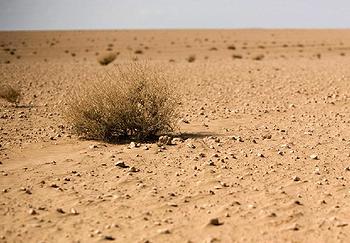
While the proximate drivers of the Syrian conflict are a reaction to an oppressive government, the wave of Arab Spring protests, and other political, social and economic factors, a number of experts have argued that climate change, or at least climate, has served as a "multiplier".
Links between climate change and the Arab Spring have been suggested for the past couple of years. High wheat prices in 2010-11, driven by droughts in Russia and China, may have contributed to the unrest in Egypt and the overall timing of the Arab Spring protests. In Syria, add on the fact that a severe drought over the past decade has devastated farmers.
From a UN Office of Disaster Risk Reduction report:
Poor and erratic rainfall since October 2007 has caused the worst drought to strike Syria in four decades. Approximately one million people are severely affected and food insecure, particularly in rainfed areas of the northeast – home to Syria’s most
vulnerable, agriculture-dependant families.
Since the 2007/2008 agriculture season, nearly 75 percent of these households suffered total crop failure. Depleted vegetation in pastures and the exhaustion of feed reserves have forced many herders to sell their livestock at between 60 and 70 percent below cost. Syria’s drought break point was the season 07/08 which extended for two more seasons, affecting farming regions in the Middle north, Southwestern and Northeastern of the country, especially the northeastern governorate of Al Hassakeh.
The drought drove internal migration to the cities, depopulating some rural areas:
The drought is causing a high drop-out rate, families left in the area who cannot afford, or do not want, to move are suffering. Some figures estimated the people lifted their villages to be more than one million people. Thousands of Syrian farming families have been forced to move to cities in search of alternative work after two years of drought and failed crops followed a number of unproductive years. The field survey that conducted by ACSAD/MoLA/UNDP in January 2011 showed that most of the houses on villages are left empty and less than 10% are occupied by old people and children, The younger generations left for thousands of kilometers seeking work.
While the Syrian drought, like any individual event, cannot be definitively attributed to climate change, the Middle East and the Mediterranean region is one place where climate models agree that drought is becoming or will become more frequent due to human-induced climate change. From Hoerling et al. (2012):
The amplitude of the externally forced [ED-meaning "human-caused"], area-averaged Mediterranean drying signal (estimated from the ensemble mean of CMIP3 simulations) is roughly one-half the magnitude of the observed drying, indicating that other processes likely also contributed to the observed drying.
Naturally, these connections need to be viewed with caution. Climate change is not solely responsible for the Syrian drought, as natural climate variability and ill-conceived land use and agricultural policy clearly also contributed. And the drought itself is only one of many stressors that led to the crisis in Syria. The fact is we will never be able to precisely calculate the contribution of climate change to a geopolitical event or a humanitarian crisis.
Does the inability to provide a precise answer - 44% due to climate change - matter?
Inability to attribute events to climate change may make adaptation seem impossible. A solution is to not view adaptation as separate from other development activities. For example, the large aid institutions recommend marrying climate change adaptation and disaster risk reduction. In other words, when working on a program or system to reduce future droughts, consider how climate change may alter the likelihood and nature of future disasters.
Right now, any of that would be a luxury in Syria. Dealing with the everyday humanitarian crisis is paramount. Hopefully, in time the crisis will abate enough to work on rebuilding people's lives and improving the capacity to deal with future droughts.
Monday, August 19, 2013
Climate change, not a carbon tax, is a war on the poor
 |
| Gas prices in BC, home to N America's only carbon tax (CP) |
I'll leave the correction of all Nickson's mistakes to colleagues, one of whom now has a response in the Sun (also see Andy Skuce), and focus on the backwards premise.
The fundamental objective of carbon controls is to reduce the emission of gases that contribute to climate change. A primary reason to combat climate change is to protect those most vulnerable to its effects. Pretty much every analysis, not to mention every extreme weather event, shows that the most vulnerable are and will continue to be the poor and disenfranchised. Politics certainly influence the design of the carbon policy,more than many people would like. Nevertheless, at the most base level, carbon taxes are being proposed and enacted to help the poor, not to hurt the poor.
There is evidence that the BC carbon tax is influencing the consumption of carbon-based fuels. At the same time, the system is not perfect, nor should anyone expect it to be. As we develop policies and programs to deal with climate change, there will inevitably be missteps, like the loopholes in the UN's Clean Development Mechanism, the number of carbon credits distributed in a cap-and-trade system, or the level of low income carbon tax credit (in BC). That happens with any policy, from climate to education to health care. The design is never perfect at first.
A sensible solution is to learn from and correct the missteps - close the loopholes, buy credits from the system, increase the tax credit, compensate those hurt - rather to throw the whole concept out the window.
Monday, August 12, 2013
Does temperature really cause depression? Correlation vs. Causation in "big data"
 |
| Image by Olimpia Zagnoli, New York Times |
So, for fun, I compared it to unemployment data and found a strong negative correlation. More marijuana use, less unemployment.
Mr. Wardle liked my assignment. Granted, his sense of humour was famous; on the weekly ten point quizzes, we got a bonus mark for adding a caption to a Far Side cartoon, and he announced the funniest caption the following class.
When he handed back the assignment, he reminded me of one key rule of research:
Correlation does not imply causation.
Which brings us to an op-ed in yesterday's New York Times. Seth Stephens-Davidowitz, an economist interning at Google, presented evidence from Google searches for possible causes of depression in the United States. After unemployment, what was the best predictor of searches for depression?
I tested dozens of variables in many different categories. The strongest predictor by far: an area’s average temperature in January. Colder places have higher rates of depression, with the correlation concentrated in the colder months. The relationship between weather and mental health has been debated, but those debates have generally relied on “small” data. Google searches, the biggest data source we currently have, are unambiguous: when it comes to our happiness, climate matters a great deal.
Paging Mr. Wardle, wherever you are.
What else happens in January in cold places?
It is dark. You don't need to be a mental health expert to know about 'seasonal affective
The availability of internet search data allows researchers to probe questions previously answered only with high effort, limited sample-size opinion polls. There can be real value to analyses with Google Trends or other storehouses or search data. The Centers for Disease Control, for example, works with Google because the number of people in an area searching for information on the flu turned out to be the best available indicator of a flu outbreak. On a simpler note, want to know whether people are more likely to use the term "climate change" or the term "global warming"? Try Google Trends, and you'll see the answer is clearly "global warming".
So by all means, examine data with Google Trends. Just remember Mr. Wardle's lesson; correlation does not imply causation. Even Stephens-Davidowitz seemed to understand this, at least in the case of one variable:
More Hispanic-Americans meant fewer searches (though this might have been a result of language factors).
Might have. You think?
Monday, August 05, 2013
Ask Google to stop supporting Senator Inhofe and others who deny and obstruct science
Last week, a group of us Google Science Communication fellows sent a letter to the Chairman and CEO of the Google, pasted below, expressing our disappointment that the company held a fundraiser in support of Oklahoma Senator James Inhofe.
Our reaction to news of the fundraiser was a mix of confusion and shock. We were brought to Mountain View in 2011 to learn how new technologies could improve science communication, with a focus on climate science. Raising funds for someone who has openly threatened climate scientists, mocked scientific practice and tried to impede scientific progress was completely incongruous with the conduct of the company we visited two years ago.
I urge people not to succumb to cynicism - "that's business" - about Google's actions. This is an opportunity. Google has made a mistake. Let's bring attention to that mistake, and ensure Google, and other companies, don't repeat it. As four of my colleagues wrote at Dot Earth:
Responsibility, however, also rests with scientists, civil society
leaders, and the public. Indeed, this may be the enduring lesson of
Google’s mistake. By speaking out when our admired companies and
political leaders let us down, we are the only ones who can create the
conditions where the morally right thing to do is also good for politics
and business.
How do you speak out?
If you work for Google, sign the virtual petition at coworker.org asking your employer to stop raising money for Senator Inhofe and others who obstruct and deny science. If you know people who work for Google, bring the petition to their attention.
----
Eric Schmidt (Executive Chairman) and Larry Page (CEO)
Google Inc.
1600 Amphitheatre Parkway
Mountain View, CA 94043 USA
August 1, 2013
Dear Dr. Schmidt and Mr. Page,
Google has earned its reputation as one of America’s most innovative and forward-thinking companies, and has shown climate leadership by improving its own environmental performance and investing in clean energy technologies. That’s why it was deeply troubling for us, as Google Science Communication Fellows, to learn about Google’s July 11, 2013 fundraiser supporting Oklahoma Senator James Inhofe’s 2014 re-election campaign.
Among his most notorious statements, Senator Inhofe has outrageously claimed that climate change is "a hoax on the American people" and, in the absence of a shred of factual evidence, accused climate scientists of being "criminals."
The reality that human activities are causing major disruptions to our global climate and that these disruptions pose serious risks to society is accepted by virtually every climate scientist and by the world’s leading scientific organizations. Yet for more than a decade, Senator Inhofe has attacked and demeaned the very scientists who have worked tirelessly to better understand the threat and to warn us of the risks posed to the environment, our communities, and our children.
In the face of intensifying heat, rising seas and extreme weather, corporate leadership and private sector innovation will be essential to developing clean energy technologies and implementing more sustainable business practices. So too will be political dialogue, bipartisanship, and cooperation. That’s why we’re strongly supportive of the outreach efforts of former Republican Congressman Bob Inglis, who today leads the Conservative Climate Coalition.
Yet sadly, over the past decade, the polarization and gridlock that has derailed efforts to address climate change owes much to Senator Inhofe, who by relentlessly attacking the scientific community has undermined efforts at cooperation and consensus building.
Given Google’s commitment to educating the public about climate change, why would the company align its political efforts with Inhofe? In responding to criticism, a Google spokesperson acknowledged “while we disagree on climate change policy, we share an interest with Senator Inhofe in the employees and data center we have in Oklahoma.”
But Inhofe's assault on the scientific community is not a difference in climate policy; it's a strategy designed to promote dysfunction and paralysis; to destroy the reputation of scientists and the legitimacy of their institutions; and to undermine our ability to find common ground.
Such a strategy conflicts with the data-driven, problem solving culture that has enabled Google’s business success and is arguably contrary to its corporate philosophy of “Don’t Be Evil.”
In 2011, as participants in Google’s science communication fellows program, we witnessed first hand the company’s unique culture. At its Mountain View headquarters, we were introduced to new communication technologies and strategies for effectively translating climate science to a broad audience.
At the time, we were proud to be part of Google’s investment in science education; inspired by the creative, talented, and passionate people we met; and eager to apply new tools and strategies in our public outreach activities. But Google’s recent support for Senator Inhofe forces us to question the company’s commitment to science communication and to addressing climate change.
Nearly every large company must – and should – work with policymakers on both sides of the aisle. We also recognize the difficulty that corporations sometimes face in reconciling their core principles with their short-term business priorities.
But in the face of urgent threats like climate change, there are times where companies like Google must display moral leadership and carefully evaluate their political bedfellows. Google’s support of Senator James Inhofe’s re-election campaign is one of those moments.
The Signatories were all Google Climate Science Communication Fellows in 2011:
Brendan Bohannan, Professor, Environmental Studies and Biology, University of Oregon
Julia Cole, Professor, Geosciences and Atmospheric Sciences, The University of Arizona
Eugene Cordero, Professor, Department of Meteorology and Climate Science, San Jose State University
Frank Davis, Professor, Bren School of Environmental Science and Management, University of California, Santa Barbara
Andrew Dessler, Professor of Atmospheric Sciences, Texas A&M University
Simon Donner, Associate Professor, Department of Geography, University of British Columbia
Nicole Heller, Visiting Assistant Professor, Nicholas School of the Environment, Duke University
Brian Helmuth, Professor, Department of Marine and Environmental Sciences and School of Public Policy and Urban Affairs, Northeastern University
Jonathan Koomey, Research Fellow, Steyer-Taylor Center for Energy Policy and Finance, Stanford University
David Lea, Professor, Dept. of Earth Science, University of California, Santa Barbara, CA
Kelly Levin, Senior Associate, World Resources Institute
David Lobell, Associate Professor of Environmental Earth System Science, Stanford University
Ed Maurer, Associate Professor & Robert W. Peters Professor, Civil Engineering Dept., Santa Clara University
Suzanne C. Moser, Director, Susanne Moser Research & Consulting and Social Science Research Fellow, Woods Institute for the Environment, Stanford University
Matthew C. Nisbet, Associate Professor, School of Communication, American University, Washington D.C.
Whendee L. Silver, Professor of Ecosystem Ecology, Department of Environmental Science, Policy, and Management, University of California, Berkeley
Alan Townsend, Professor, Institute of Arctic and Alpine Research and Department of Ecology and Evolutionary Biology, University of Colorado Boulder
Note: Affiliations are for identification purposes only and do not imply endorsement by an individual’s institution or organization.
Tuesday, July 16, 2013
Has global warming continued?

That we need to stop. Let's flip this around: "Has global warming continued?"
Yes. Global warming continues along, as this nice graphic from Climate Nexus shows so clearly.
The confusion is about surface temperatures. Over the past 10-15 years, the global mean surface air temperature did not increase at the rate of the previous decades. The cause of the slowdown is primarily natural variability, variability that is driven by long-term oscillations in the oceans. The planet is still adding heat - we can see in this planetary energy balance data. The difference is for the past few years, more of that heat is gathering in the deep ocean.
In a few years, the yin of deep ocean heating will give way to the yang of surface temperature warming. Among other things, we'll see full El Nino events develop again - there has not been one since the climate shifted in 1998, something my lab is studying - and with that, new global surface temperature records.
Thursday, July 11, 2013
This is what you call extreme weather, Toronto edition
The thunderstorms in Toronto earlier this week broke that city's seemingly unbreakable one-day rainfall record, set in 1954 by the meteorological oddity known as Hurricane Hazel.

Monday, July 08, 2013
New videos on Communicating Climate Science
The videos from the AGU Chapman Conference on Communicating Climate Science are now available.
There are several great talks on the history of climate science, effective and ineffective public engagement programs, and the research on why we sometimes struggle to explain the basic science outside the classroom. Among my personal favourites was John Calderazzo's talk on the importance of storytelling.
Here's my contribution, on how the climate influences the way we think about climate change, both at home and abroad:
Wednesday, June 26, 2013
Awaiting a Canadian response to Obama's climate speech
For about a decade, the explanation for a lack of coherent Canadian climate policy was the lack of a coherent American climate policy. How could our federal government move forward with actions like regulations, carbon pricing, renewable portfolio standards, international agreements or adaptation plans without our largest trading partner and BFF?
This argument was literally encoded in Canadian policy by the current government (see page 15):
Given the degree of economic integration with the U.S., we are aligning
our climate change approach with that of the U.S. as appropriate, to
maximize progress on reducing emissions while maintaining economic
competitiveness
Now the U.S has a plan. No, it is not perfect, but it is far more advanced than any plan proposed by any sitting President or Prime Minister.
The ball is in our court. Time for Canada, time for Canadians, to define "as appropriate".
Wednesday, June 19, 2013
Some of Rolling Stone's "10 Dumbest Things Ever Said About Global Warming" are not so dumb
There's no shortage of dumb things said about global warming. Compiling a list of the ten dumbest requires wading though thousands and thousands of inane extrapolations about climate change impacts, butchered explanations of the physics of the climate system, and downright wacky U.S. congressional testimonies that seem to come from an alternative universe. There was an entire "global warming movie", the Day after Tomorrow, featuring storms that defied the laws of thermodynamics.
Given the full panoply of options out there, it is disappointing to see Rolling Stone's new top-ten list feature the following two entries:
4. Climate change is impossible because "God's still up there."
8. Safeguarding the climate is "a worldview that elevates the Earth above man."
These may seem dumb to people who read Rolling Stone, but not to many other people on the planet.
The entries are based on quotes from religious conservative American politicians, all of which essentially argue the climate is outside the human domain. As I've documented multiple times, the view that the
climate is beyond human control is not radical. If you take a historical perspective, the opposite is
true. The fact that we can change the climate is a relatively new concept, one that counters thousands of years of human culture and belief.
These two of the "dumbest" things are also not unique products of the politicized Western climate change debate. Here's an example from #4:
A close runner-up in this category: In 2009, Rep. John Shimkus (R-Illinois) cited God's post-flood promise to Noah as evidence we shouldn't be worried. "The Earth will end only when God declares it's time to be over," he declared.
Rep. Shimkus' argument about the flood is not an invented Republican talking point. The same argument about the covenant between the Biblical God and Noah (that the seas will not rise again) is made by many elders in Tuvalu and Kiribati, when told that human activity is making the sea rise.
Certainly, we need to fight wholly incorrect statements about climate change. It is important that people appreciate the fake, uncritical and often organized skepticism about climate change out in the ether. And, sure, it is possible that the statements by Rep. Shimkus and the others fall into that category; maybe the statements were carefully designed to tap into the audience's beliefs.
Regardless, many people in many countries honestly agree with those statements. You don't engage new audiences by mocking their core beliefs.
Monday, June 10, 2013
Follow the AGU Chapman "Communicating Climate Science" conference online

It is not an empty gesture. The organizers are trying to mix in questions from the online viewers, sent either via the meeting web-cast site or using the twitter hashtag #climatechapman.
A number of people here, Gavin Schmidt, myself and others, are also tapping out live tweets during the sessions.
Tuesday, June 04, 2013
America's big three: corn, soybeans and wheat
Last night, after a scare from the tough Indiana Pacers, the Miami Heat's "big three" of LeBron, Wade and Bosh advanced to the NBA Finals.
Unlike the other major North American sports, in basketball, it is possible for teams with just three great players to dominate. In baseball, football and hockey, with dozens of players per team each with very defined roles, the presence of three great players alone won't get you to the championship.
 U.S. agriculture is a lot like basketball. Over the past few decades, the big three of corn, soybeans and wheat have come to dominate U.S.
agricultural land. Yet, as in basketball, the basic parameters of the game have not changed. The court - the amount of land used to grow crops - is the same size it was back in the 1930s, despite the players getting larger and more skilled.
U.S. agriculture is a lot like basketball. Over the past few decades, the big three of corn, soybeans and wheat have come to dominate U.S.
agricultural land. Yet, as in basketball, the basic parameters of the game have not changed. The court - the amount of land used to grow crops - is the same size it was back in the 1930s, despite the players getting larger and more skilled.
This spring, planting of the big three crops
account for an estimated 231 million acres of agricultural land. That is, by my estimate from USDA data, roughly two-thirds of all cropland, and 87% of cropland devoted to major crops (i.e. not fallow or idle). Outside of brief soybean-driven surge in the early 1980s, there is currently a greater amount and proportion of cropland being devoted to corn, soybean and wheat than ever before. The current surge is driven largely by the use of corn for ethanol, as well as the continued demand for soybean and corn for animal feed.
The Heat's opponent in the Finals are the San Antonio Spurs. Though the Spurs have their own big three - Duncan, Parker and Ginobili - the team is best known for its tough coach who makes use of every role player on the bench. It is a true clash in styles. I'll be curious to see who wins.
Monday, June 03, 2013
How scientists can talk about public policy

After opening with a discussion of my own path to research on climate change and coral reefs, we go into details on the value of adopting a 'scientific' approach to policy judgements, the risk of 'stealth' issue advocacy (a term coined by Roger Pielke Jr.), the benefits of communications training, and the importance of engaging with the public without disengaging from science.


